
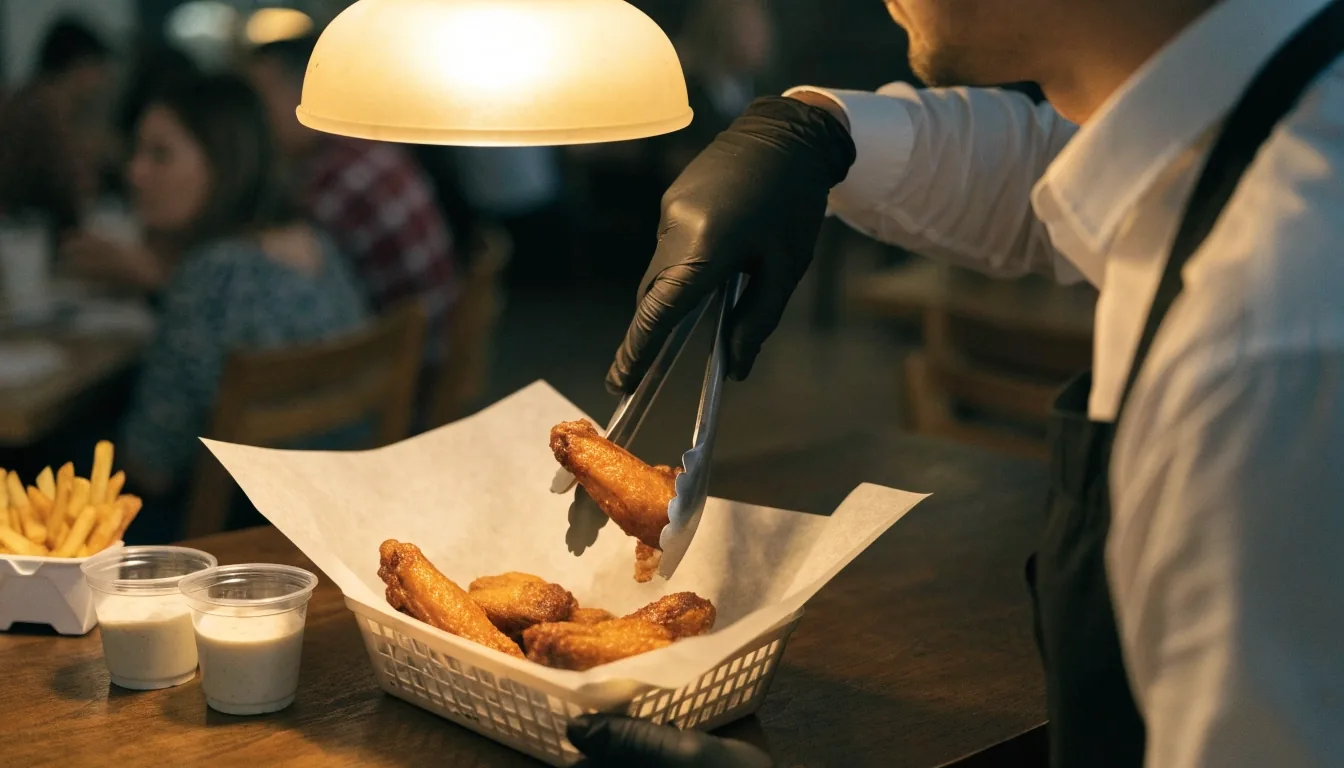
Wingstop vs Buffalo Wild Wings
Wingstop and Buffalo Wild Wings Compared
Both chains sell chicken wings, and past that the two nights diverge quickly. One is built around flavour and a fast counter. The other is built around tables, screens, and staying a while.
Fast box or long table — pick the night, not the logo.
Format first
Two different formats
Wingstop runs a narrow, wing-first model: order at the counter, pick your flavour, take it home or eat quickly. Buffalo Wild Wings is a sports-bar concept, with a dining room built for sitting, watching, and ordering over time.
That difference shapes everything else, including how long you stay and how you order. If your plan involves a table, a server, and a game on a screen, the formats are not interchangeable. If your plan is a fast box of specific flavours, one of them is clearly the better fit.
For a Toronto weeknight, the question is simple: do you want to be in and out in fifteen minutes, or settled in for two hours?
At a glance
Wing stop orders travel well because the menu is built for boxes. Sports-bar plates are built for rounds and refills.
Check Wingstop availability in CanadaWhat is on the tray
Menu focus
Wingstop keeps it tight
Bone-in wings, boneless wings, tenders, fries, and dips, with the flavour lineup as the centrepiece. You choose the chicken, you choose the coating, and the kitchen finishes it to order.
That focus helps when everyone at the table actually wants wings. Fewer pages to flip, fewer compromises, and the flavour you named is the flavour you get.
The bar menu spreads wide
The sports-bar menu reaches past wings into other bar-food territory. That breadth is an advantage for a group that cannot agree, and a disadvantage if you want the wings to be the whole point.
A mixed table with one non-wing eater will have an easier night there. A table of wing-focused people is well served by the tighter list.
Flavour is the order
Sauce and flavour variety
Both chains take flavour seriously, and both offer a wide range. The practical difference is how you meet the choice: at Wingstop the flavour is the order, applied as a coating to your chosen chicken. At a sports bar, sauce often arrives alongside a broader plate.
Mild
Buttery and calm. A starting point if you want flavour without heat.
Original Hot
The middle billing. Vinegar lift, steady warmth, the classic wingstop reference.
Cajun dry rub
Dry seasoning instead of gloss. Holds crunch a little longer on the way home.
Hawaiian sweet
Sweet option in the twelve-flavour framework. Useful when the table splits hot and not.
Atomic
Top billing for a reason. Order small first, share, and keep a cool dip close.
Wing stop comparison tip: at Wingstop you taste the coating system. At the sports bar you taste the sauce against a full plate. Neither is wrong — they are different ways to meet heat. Compare the flavour heat levels before you order.
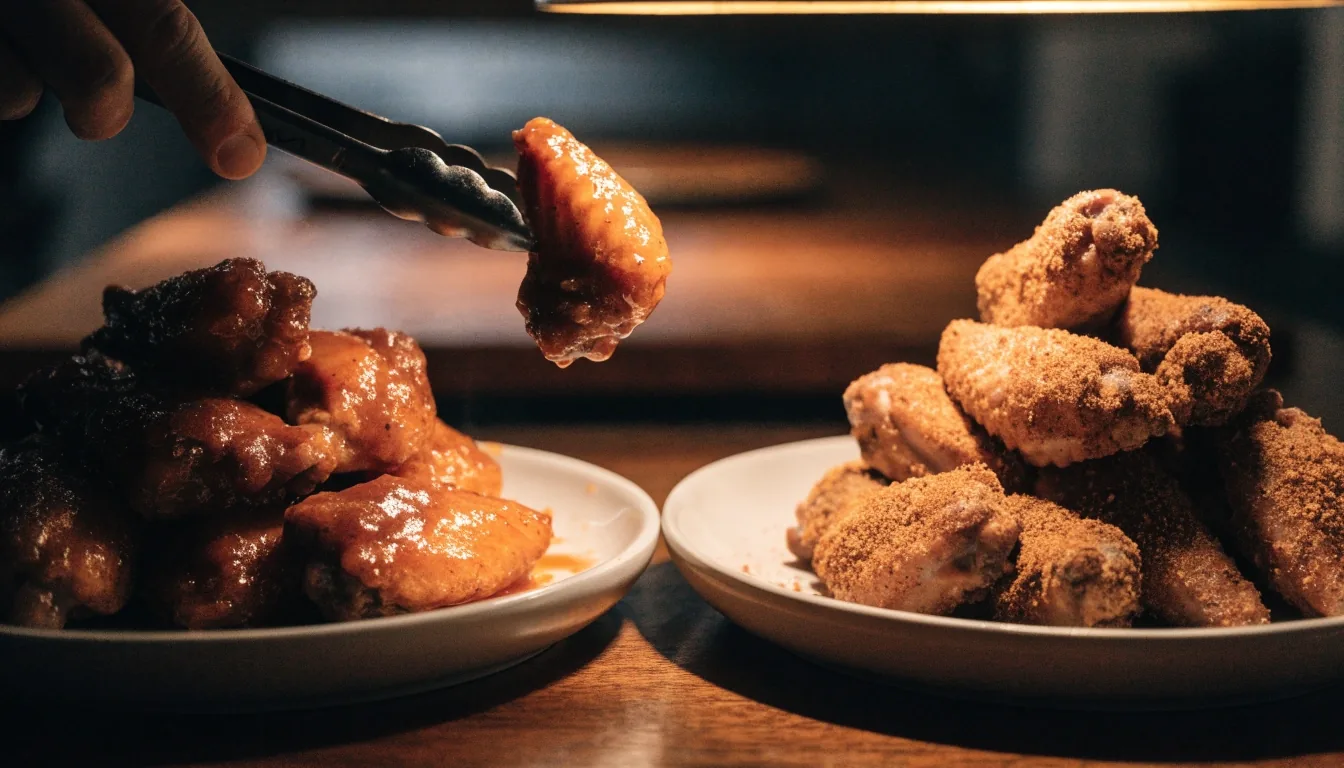
Coating tells the story
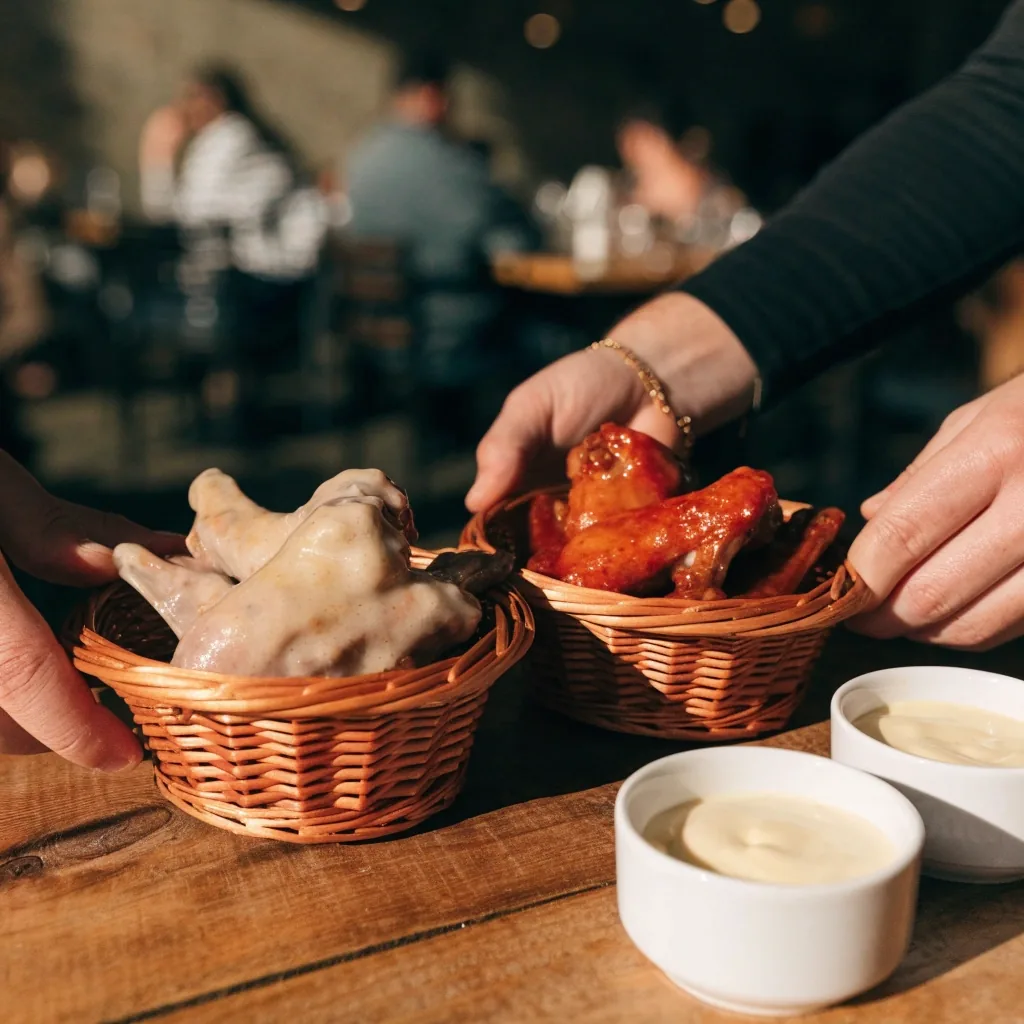
Gloss softens fast. Dry rub stays crisp. The plate tells you before the first bite.
Service and atmosphere
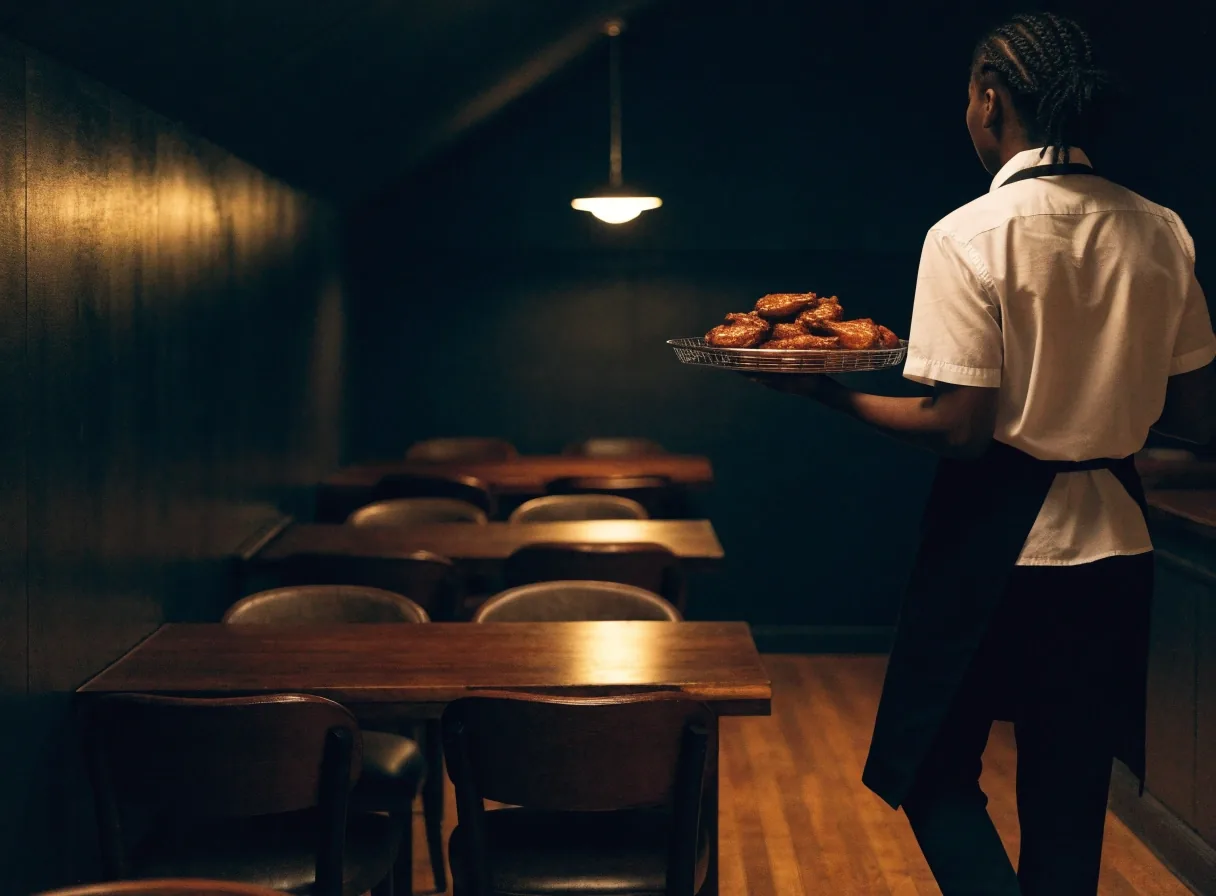
The dining room is part of the product when you stay.
Atmosphere is the clearest divider. Buffalo Wild Wings is designed for lingering, with the dining room as part of the product. Wingstop leans toward quick service and takeout, which suits a weeknight order or a group splitting a box at home.
If you want a quiet table and a long conversation, the sports-bar setting is built for it, screens and all. If you want to be in and out with exactly the flavours you picked, the faster format wins.
Ask yourself before you go
Do we need a server and a screen, or do we need a box with our names on it? Answer that and the choice makes itself.
Takeout and delivery
Short trip keeps the crunch
For takeout, a wing-first counter model has an obvious edge in speed, and the food is packed to travel a short distance. Buffalo Wild Wings can also do takeout, but the experience is built around eating in.
Fried wings have a short window before texture drops, so whichever chain you choose, the shorter the trip the better. Sauces hold up a little better than dry rubs on the way home. If delivery is your only option, plan to eat as soon as the box arrives.
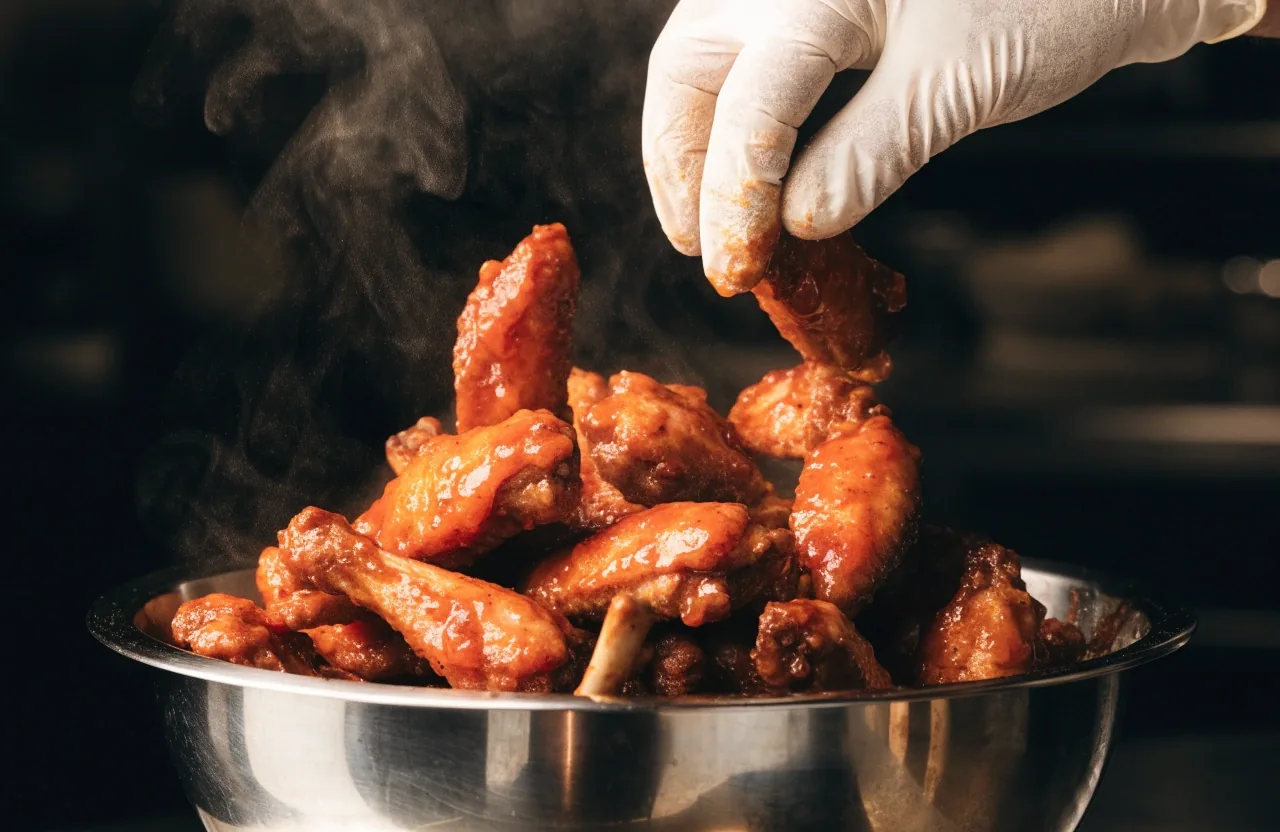
Eat on arrival — the last wing should taste like the first.
Match the night
Which one fits your visit
Match the chain to the occasion. Think about the night, not the brand.
Solo or family box
Counter order
Game with friends
Dining room
Mixed group
Broader menu
Wing-focused table
Tighter list
A solo order or a quick family meal with a couple of specific flavours points one way. A group watching a game, ordering in rounds, and staying a while points the other.
What wing fans should actually compare
Set aside the logos and compare three things: how the wings are coated, how the heat scale runs, and how the food travels. Those three questions will tell you more than any general ranking.
How the wings are coated
Coating decides whether your order arrives crisp or soft. Wet gloss soaks in fast; dry seasoning keeps the edge.
How the heat scale runs
Names only help if you know what they mean. Start mild, step up once, and note where your comfort sits.
How the food travels
Travel decides whether the last wing tastes as good as the first. Short trips, vented boxes, sauce on the side when you can.
Is one chain hotter than the other?+
Where should a first-timer start?+
Which travels better for takeout?+
Keep reading
Pick your next box with facts
Use the same three questions on our menu and flavour pages, then check what is open near you. The Toronto guide is at 1200 Bay St, Toronto, open Monday to Sunday 11:00 to 23:00.
Mild · Original Hot · Cajun · Hawaiian · Atomic — same order, every page.