
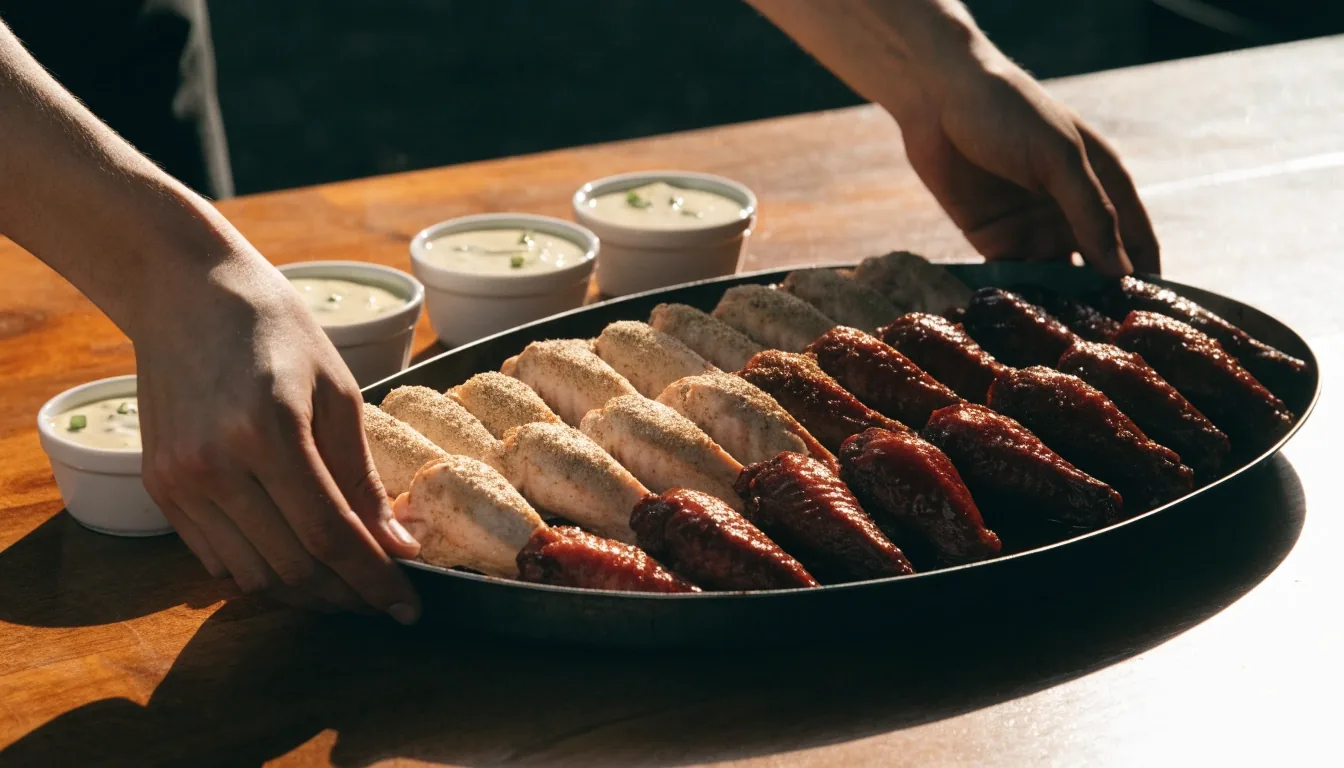
Flavour Heat Scale — Wingstop Canada Guide
Comparing Wingstop Flavours by Heat
Wingstop names do not always tell you where a flavour sits. This guide orders the well-known wing stop options by heat and taste, so a dozen wings lands the way you meant it.
Type size is heat. Bigger billing means more burn.
How to read a heat scale
A heat scale is only useful if it reflects taste, not just burn. Two wingstop flavours can sit at similar spice levels and feel completely different because one is vinegar-forward and the other is built on dry seasoning and butter.
Read each entry below on two axes: how much heat it delivers, and what else it tastes like. A flavour that is too hot for you is not the same as a flavour that is badly made. Most disappointing orders come from a mismatch, not a bad sauce.
The brand frames its menu as a set of twelve flavours. The five below are the reference points most regulars use to calibrate. Learn where you sit on them, and the rest of the wing stop board gets much easier to order — in Toronto or anywhere else in Canada.
The ledger — low to extreme
Five flavours, ranked by fire
Mild
The low-heat anchor. Order Mild when the goal is wings, not a challenge. It keeps a family table or mixed group eating without anyone reaching for a drink, and it gives you a baseline: once you know how Mild reads, you can judge how far up you want to go. First visit? Start here and calibrate.
Tastes like: buttery, peppery, calm — pairs with ranch
Hawaiian
The sweet counterpoint. Hawaiian exists because not every order should be a heat test. In a menu built around bold spice, a sweet option gives a group somewhere to land without dropping to Mild. It pairs naturally with ranch, and it is the pick for anyone who wants wings without spice. Sweet is not a compromise — it widens who can eat at the table.
Tastes like: pineapple-sweet, sticky glaze — no burn
Cajun
Seasoned heat with character. Cajun reads as spiced rather than purely sharp, which suits people who want flavour alongside the burn. Compared with a straight hot sauce it has more going on, and it holds up well against bleu cheese. Think dry Southern-inspired seasoning as a coating — earthy, peppery, warm rather than vinegary.
Tastes like: dry rub, garlic, cracked pepper — pairs with bleu cheese
Original Hot
The standard reference. This is what most people mean by hot wings — clearly spicier than Mild by a full step, far below Atomic. It works as a default for anyone who likes heat but is not chasing a record. If you eat Original Hot comfortably, you know your tolerance. If it is already too much, stay below it.
Tastes like: classic buffalo vinegar and cayenne — the middle mark
Atomic
The top of the scale. Atomic is discussed in challenge terms for a reason — not a flavour to order by accident, and not one to hand a child or a first-timer. If you like heat and want to find your ceiling, test it here. Order it as one flavour among others, in a small share, so you have something to fall back on.
Order small. Keep ranch close. Do not coat the whole order.
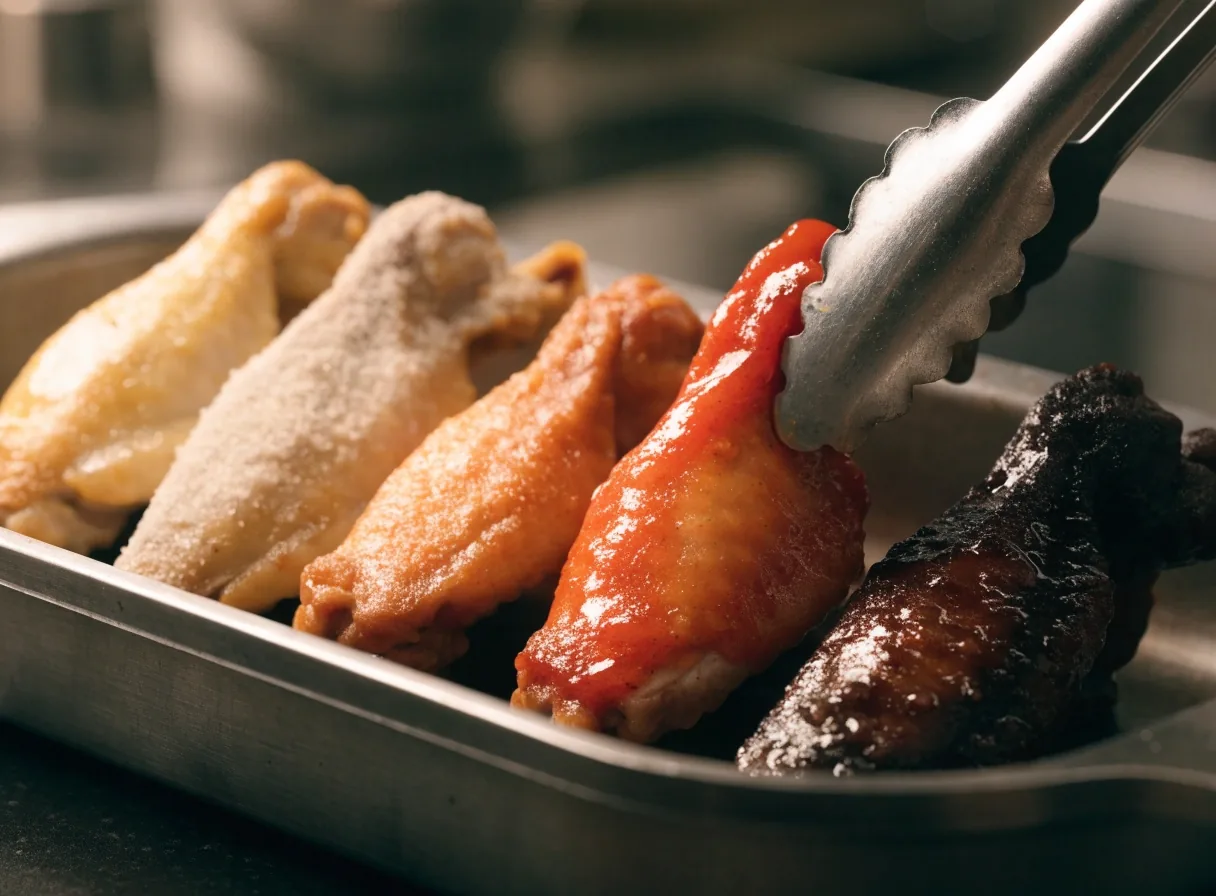
On the tray — colour tells part of it
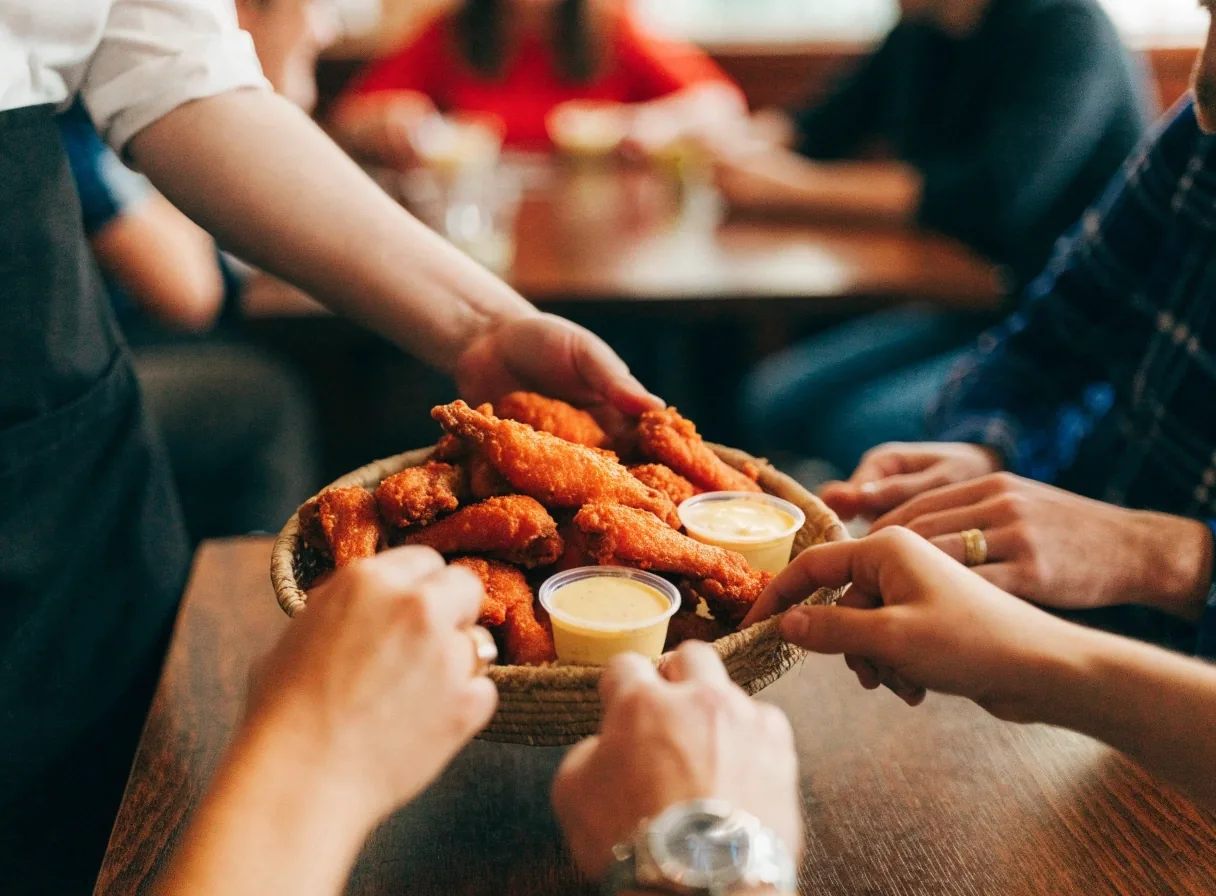
Mild looks buttery and pale. Cajun looks dry and dusted. Original Hot shines orange-red. Atomic runs darker and oily. Colour hints at heat, but taste confirms it — always read both.
- Dips change the read — ranch cools, bleu cheese sharpens Cajun.
- Bone-in holds sauce longer; boneless eats milder per bite.
- Heat builds across a dozen — judge by wing six, not wing one.
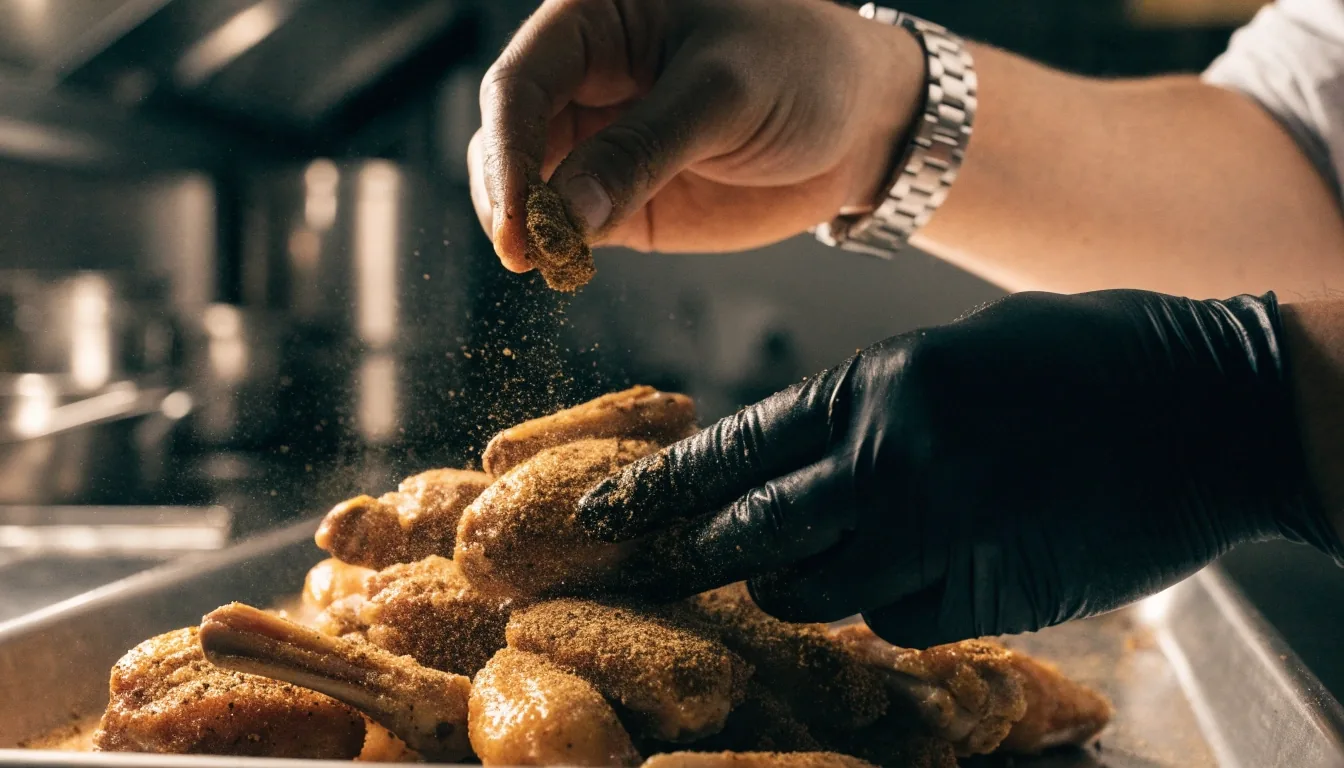
Fresh toss — where flavour sticks
Wings are sauced to order. That fresh toss is why Cajun clings dry while Original Hot and Atomic glaze wet — and why the same heat level can feel so different.
Low to high — the working order
Mild, Hawaiian, Cajun, Original Hot, Atomic.
Read as a rough progression, the lineup moves from Mild, through the sweet and seasoned middle of Hawaiian and Cajun, then Original Hot, and finally Atomic at the far end. That ordering is about heat, not quality. A flavour near the bottom can be exactly the right choice for your table.
Use the scale to match your tolerance first, then pick the taste you actually want inside that range. Sweet tooth with low tolerance? Hawaiian. Seasoning lover with mid tolerance? Cajun. Classic burn? Original Hot.
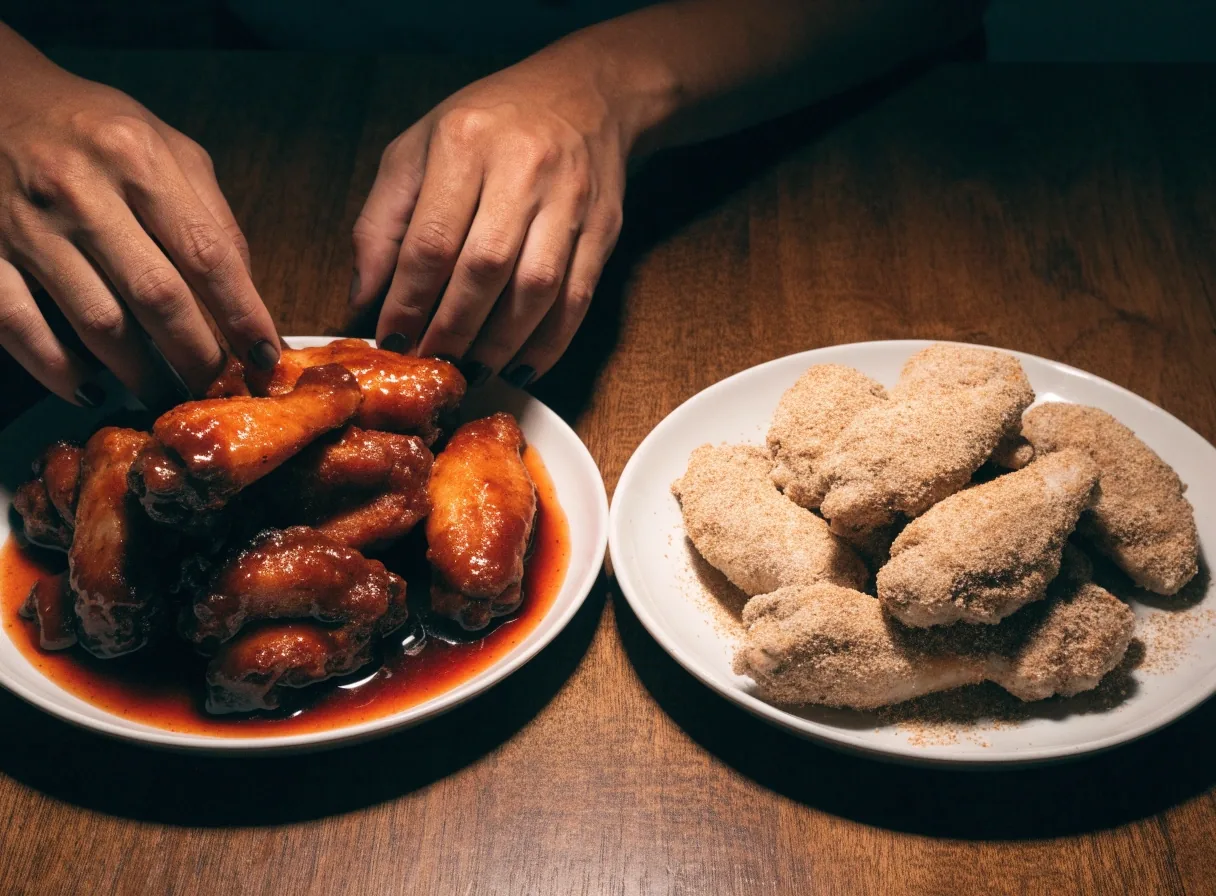
Left plate shines wet, right plate sits matte with spice. That visual split is the fastest way to explain Cajun against Original Hot to a table that cannot agree.
Feeding a table
How to choose for a group
The single most useful move for a group order is to split flavours across the wing count. Nobody gets stuck, and the Atomic fans still get their moment without taking over the whole tray.
Cover the cautious end first
Take one low-heat option — Mild or Hawaiian — in a full share. For kids, first-timers, or anyone who just wants to eat, that tray is the safety net that keeps dinner calm.
Hold the middle with Cajun or Original Hot
Add one mid-range flavour as the shared main. Cajun if the table likes seasoning, Original Hot if they want classic buffalo burn. This is the dozen that disappears fastest.
Keep Atomic small and separate
Order Atomic in a small quantity, boxed apart if you can. Keep the portion modest unless you know your table, and let whoever wants the ceiling test opt in.
Order both dips
Ranch and bleu cheese change how each flavour reads. Ranch softens Original Hot and Atomic; bleu cheese lifts Cajun. Cold drinks and extra napkins do the rest.
When heat is not the point
Staying low is a good order
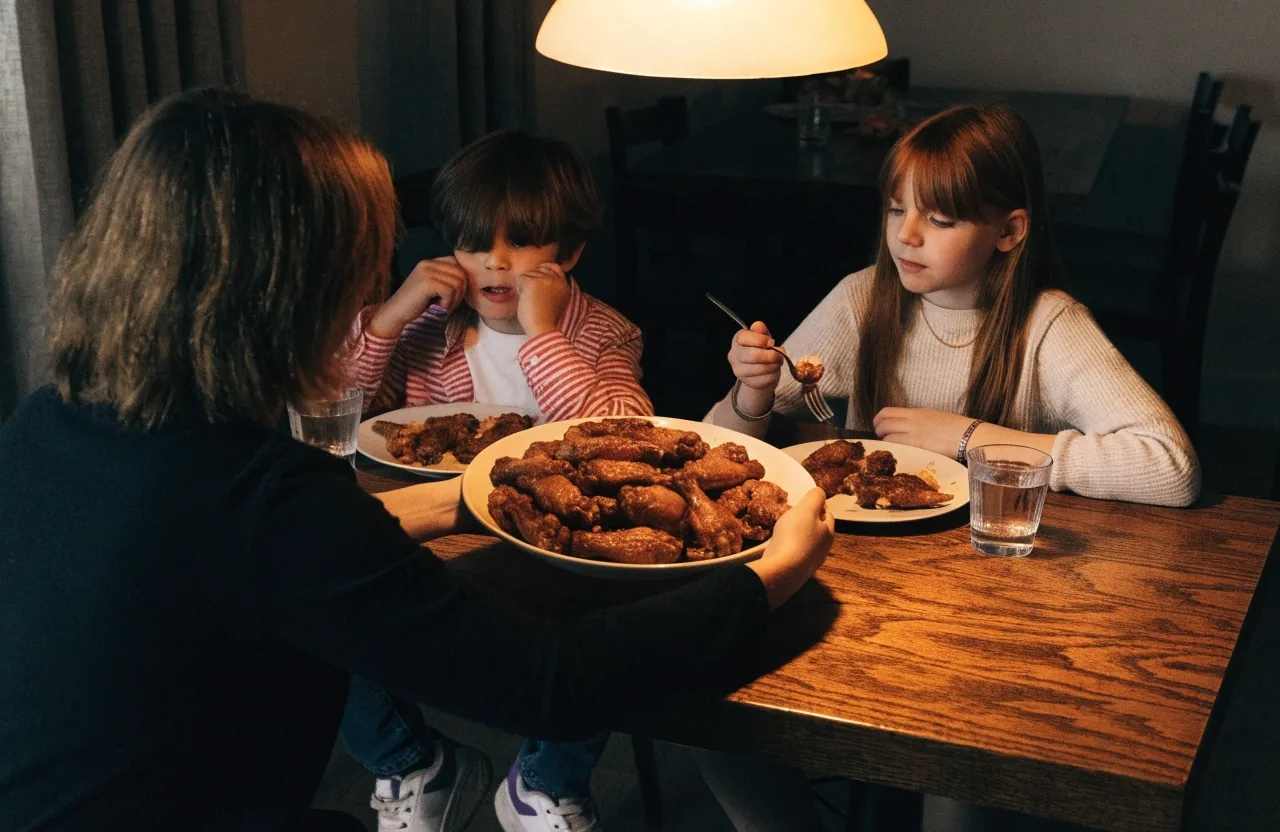
Some visits are not about spice at all. If you are ordering for kids, or for a group that just wants to eat, staying low with Mild and Hawaiian is a perfectly good order. The lineup exists to cover that range, and treating the mild end as a lesser choice misses the point.
The best order is the one your table finishes. Heat is one variable, and it is not the only one that decides whether a meal works — texture, sauce amount, dips, and who is at the table matter just as much.
Quick answers before you order
Which wing stop flavour should a first-timer try?
Start with Mild. It shows you the wing itself without heat getting in the way. If that feels easy, try Cajun next for seasoning, then Original Hot when you want real burn.
Is Cajun hotter than Original Hot?
Usually Original Hot burns sharper because of its vinegar-pepper base, while Cajun feels warmer and more seasoned. Sensitive to vinegar heat? Cajun may eat easier even though it is still mid-scale.
How hot is Atomic, really?
Atomic sits at the extreme end and builds fast across several wings. Order a small share alongside milder flavours, keep ranch and water close, and do not hand it to kids or first-timers.
What if nobody at the table wants spice?
Build the whole order from Mild and Hawaiian with ranch. You still get crisp wings and full flavour — heat is optional, not required.
Keep reading
Pick your next plate
Visiting in person? Find us at 1200 Bay St, Toronto, ON M5R 2A5 — open Monday to Sunday, 11:00 to 23:00. Questions about an order? Call +1-416-555-0198 or write to [email protected].